Osteoporosisis often called the “silent disease”. Bone loss occurs over many years, causing no pain or visible symptoms until a fracture eventually makes it impossible to ignore. A DEXA scan is the only way to detect that bone loss objectively, before a fracture occurs.
For anyone with known risk factors for low bone density, or for those simply wanting to understand their skeletal health, a DEXA scan provides the most reliable data available.
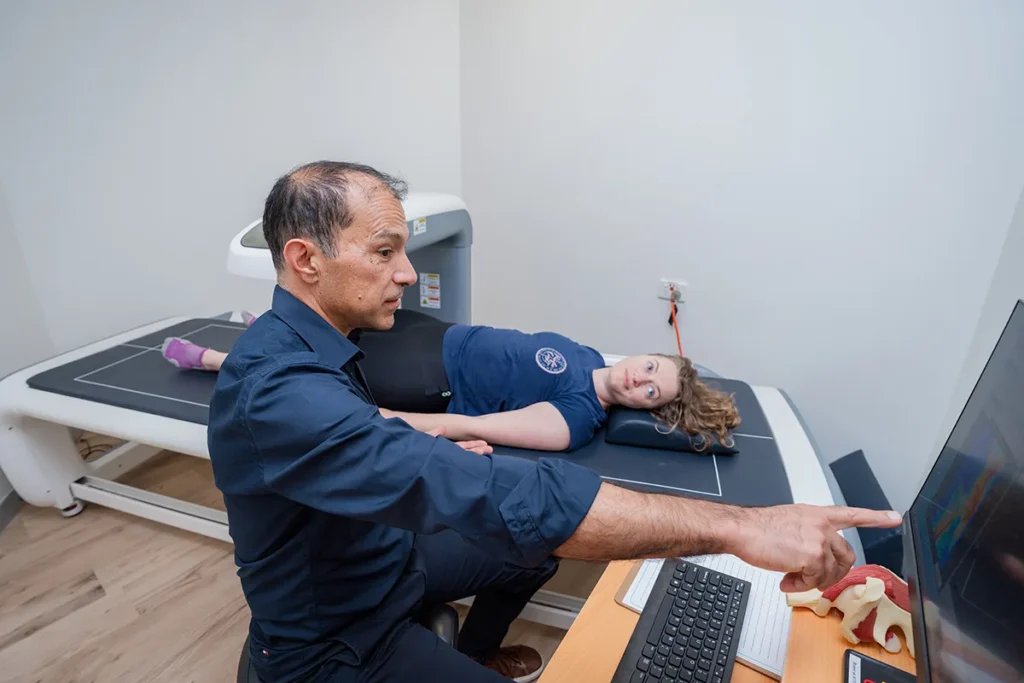
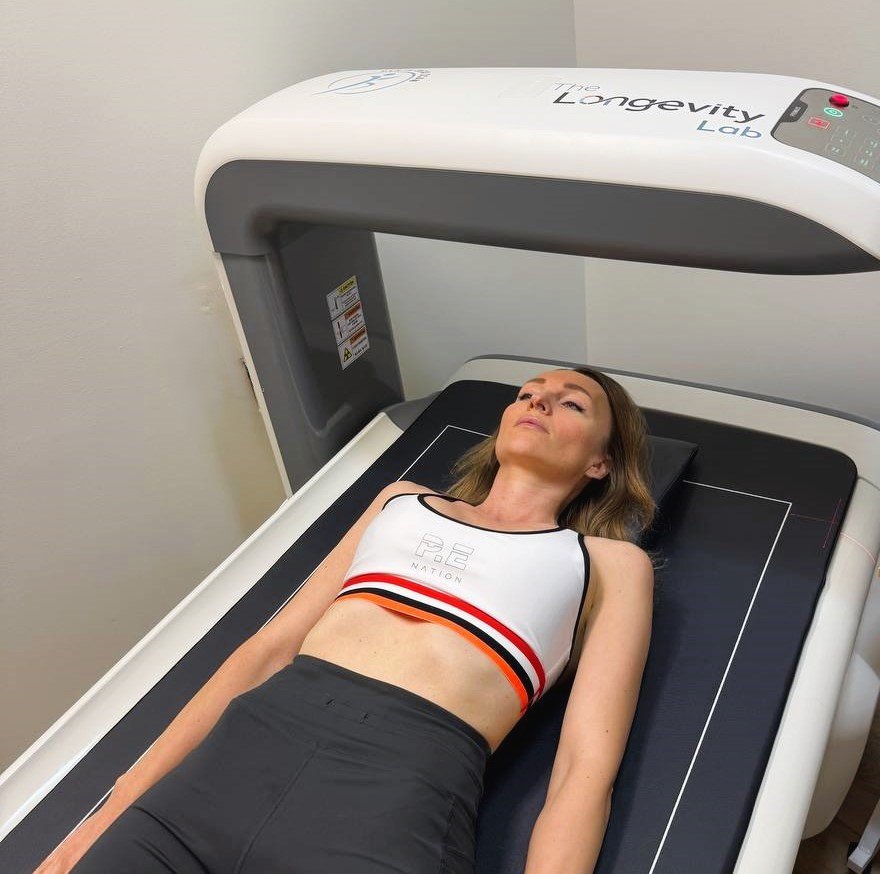
DEXA stands for Dual-Energy X-ray Absorptiometry. It is the gold standard for measuring bone mineral density (BMD). The scan uses two low-dose X-ray beams to measure the density of bone at key sites. These key sites include the lumbar spine and hip, and produces a result expressed as a T-score and Z-score.
T-score: Compares your bone density to that of a healthy 30-year-old of the same sex. A T-score of -1.0 to -2.5 indicates osteopenia (low bone mass); below -2.5 indicates osteoporosis.
Z-score: Compares your bone density to others of your age and sex, which is particularly useful in younger individuals.
A DEXA scan is a quick, non-invasive procedure. There is no injection, no claustrophobic tunnel, and the radiation exposure is very minimal.
Who Should Have a DEXA Scan?
Clinical guidelines recommend bone density testing for the following groups:
Women aged 65 and over
Men aged 70 and over
Postmenopausal women under 65 with one or more risk factors
Men aged 50-69 with one or more risk factors
Any adult who has sustained a fragility fracture
Adults taking long-term corticosteroid medication
Adults with conditions associated with secondary bone loss: rheumatoid arthritis, diabetes, celiac disease, chronic kidney disease, eating disorders, or cancer treatment
Athletes with suspected relative energy deficiency in sport (RED-S)
Anyone with a family history of osteoporosis or hip fracture
It is worth noting that osteoporosis is not solely a condition of older women. Men, younger adults, and people with specific medical conditions can develop significantly low bone density at any age.
If you are uncertain whether testing is appropriate for you, your GP can provide a referral.
What Does a DEXA Scan Measure?
A standard DEXA scan for osteoporosis assessment measures bone mineral density at:
Lumbar spine (L1-L4): The lower back is highly responsive to bone density changes and is a key site for monitoring treatment response.
Proximal femur (hip): Including the femoral neck, which is the most common site for hip fracture — one of the most clinically significant outcomes of osteoporosis.
Some assessments also include the forearm, which is particularly relevant if hip and spine measurements are not interpretable due to arthritis, surgery, or other structural changes.
How Bone Density Results Inform Treatment
A DEXA scan result does not exist in isolation. Bone mineral density is one component of a broader fracture risk assessment that includes clinical risk factors such as age, weight, smoking, alcohol intake, prior fracture history, and current medication use.
This is clinically important: two people with the same T-score may have very different fracture risk profiles depending on their other clinical factors. A thorough assessment, beginning with a DEXA scan, provides the foundation for evidence-based management.
Monitoring Over Time
A DEXA scan is not a one-time event. Serial scanning at appropriate intervals — typically every 1 to 5 years depending on clinical risk — allows clinicians to track whether bone density is stable, declining, or responding positively to treatment or exercise intervention. Without repeat scanning, it is impossible to determine whether any intervention is working.
If you have been prescribed bisphosphonate medication or are following a targeted exercise program for bone health, a follow-up DEXA scan is an essential part of monitoring your response.
Book a DEXA Scan in Perth
Perth DEXA Scan provides accurate, clinically reported bone density testing for patients across Perth. Whether you have been referred by your GP or are seeking a scan independently, our team can guide you through the process. To book your appointment or learn more, visit perthdexascan.com.au.